Listen – I’m pretty open to trying new things, especially when it comes to self-care. I’ve tried face masks, hair masks, body scrubs, beauty supplements, and pretty much every other beauty-related item you can think of. The one product I haven’t yet added to my routine, however, is a butt mask. Yes, you read that right – a mask for your butt.
Anese is a small, indie skincare brand that sells scrubs and masks meant to fight cellulite, reduce the appearance of stretch marks, soften the skin, and reduce acne – all on your backside. Their packaging is minimalist, pink, and really cute, which checks all the boxes for things I typically impulse-buy. I’ve got to say, I’m kind of a picky consumer to advertise to, but this whole butt-masking thing definitely caught my attention as soon as it showed up in my Facebook feed. Without their strategic use of Facebook’s advertising tools, I probably would have never heard of Anese. They’re such a small brand that I probably just wouldn’t have found then organically. However, when I scrolled through my social media and saw this, I knew I had to check it out:
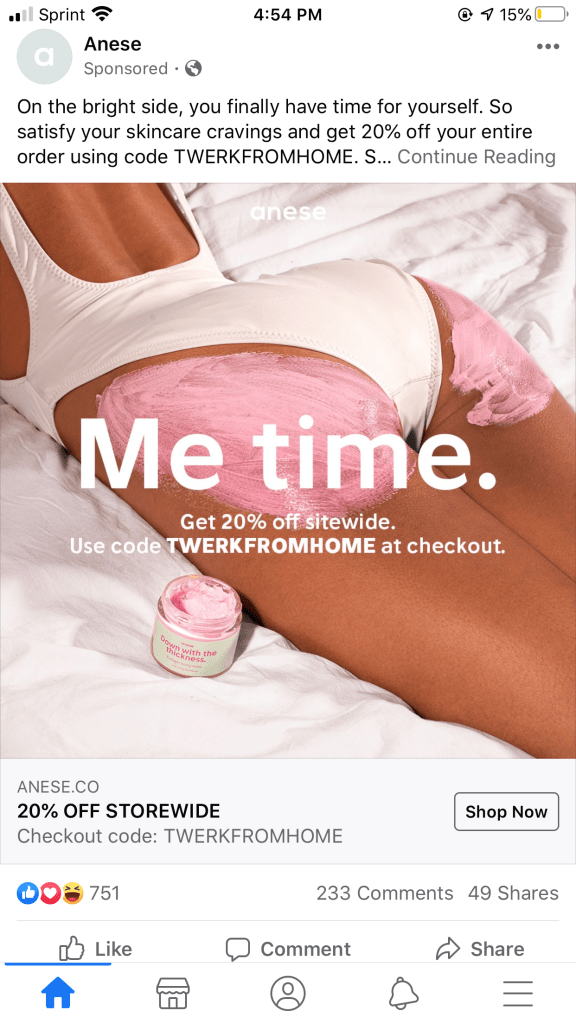
I mean, do you blame me? Seriously, though, this is an effective ad for the target market Anese is trying to reach. I definitely think that this advertisement is focused on the conversion part of the consumer journey, considering they have a “Shop Now” button placed at the bottom and also provide a coupon code for 20% off site-wide. Their goal here is to entice consumers with the discount and easy access to their website in order to convince them to order. As for advertising objective, I think it was also conversion. This ad is specifically placed and designed to push consumers to visit the website via the Shop Now button and place an order using the discount code provided in the ad. The photo of the woman using the mask stops potential customers in their scrolling tracks, and the promotional code combined with the direct link drives sales. In my opinion, it hits the nail on the head in terms of being attention-grabbing as well as providing motive for consumers to follow through to their site and make a purchase.
Anese definitely caters to women like me – ages 18 to 40, potentially heavy social media users, interested in skincare, makeup, self-care, and not afraid to try new things. Their products cater to badass women who live busy lives, potentially working or in school, who like to go the extra mile with their skincare routine when they finally have time to pause and take care of themselves. Their marketing strategy is bold, which matches the personality of their target consumers. They have a spunky, confident, IDGAF attitude about their brand, so I definitely think they try to target women who share with those traits.
Not gonna lie, I’m kind of interested in taking a closer look at this brand’s products. That tells me that this ad is effective – it’s eye-catching, uses colors and graphics that appeal to the target market, and makes it easy for consumers to view their products and get them for a discounted price. This was advertised to me on my Facebook page, so obviously I’m part of the target market. I stopped, looked at it, and proceeded to click through, which means they accomplished their goal by placing it in my feed.
The second ad I looked at was from a brand called Soko Glam, and it showed up in my Instagram timeline:

This ad felt more awareness related to me. Soko Glam is a retailer that sells Korean skincare and beauty products from other brands through their own platform, so they don’t really advertise their “own” products. In addition, they have less than 400,000 followers on Instagram, so I’m assuming they’re still working toward building brand awareness and bringing traffic to their website (the marketing objective). Through introducing an additional brand’s product that is now available on their website, they are able to reach consumers who may already be fans of that brand and convince them to shop on Soko Glam to find other related products. Their “Shop Now” button is also placed at the bottom of the ad, which makes it convenient for potential consumers to click and shop, increasing their traffic.
Soko Glam’s target market is similar to that of Anese – women, ages 18 to 45, who are interested in clean makeup, clean skincare, Korean beauty trends, and probably social media. They target consumers who are willing to spend more than the average person on a skincare routine, because they offer a wide array of different products. Since a fully-stocked skincare routine can be expensive and time-consuming, they probably don’t market to women with super busy family lives, swamped school schedules or those who prefer a more simplified, drugstore-available product collection.
I think this ad is effective for the business because it gives consumers an idea of the types of products that Soko Glam sells, and encourages them to click through to their website to view more. This ad, when effective, does accomplish the goal of introducing more people to the brand as well as increasing website traffic and the potential for actual sales.
Both of these advertisements, in my opinion, are effective for their intended purposes. I think Anese did an overall better job at capturing my attention and convincing me to visit their website, but I also think I align more with their target market than that of Soko Glam. It was interesting to analyze both of these ads from different marketing objective standpoints, because although they’re similar, they’re intended for different purposes. I haven’t really taken the time to look into something like this before. By the way, I’ll update this post if I actually ever try butt-masking.
 Welcome!