It’s 7:00 AM. My alarm goes off, and I wake up to snooze it. This happens a few more times before I’m actually coherent, but as soon as I am, it’s straight to social media I go. I have the same routine every morning, groggily staring into the bright light of my phone and scrolling through the last eight or so hours of posts that I’ve missed while I was sleeping. Admittedly, it usually isn’t much, so I get out of bed and make breakfast, do my makeup or work on my laptop for a while before I go to school. Of course, I watch new YouTube videos or listen to the latest episode of my Podcast series while I get ready – then it’s Spotify through my headphones on the way to class. In the first two hours of my day, I have already spent the majority of my time connected to my phone.
After class, I pack up my books, put my coat back on, plug in my headphones and immediately check my text messages and social media platforms again. It’s probably only been an hour since I last scrolled, but what if there’s more? I walk home and scroll, scroll, scroll, ignoring the city bustling around me while I like Ashley’s new selfie on Instagram and find a cheesy motivational quote on Pinterest to send to my boyfriend. My day goes on and on like this – check Instagram, check Facebook, check Twitter, check TikTok (for two hours, because although I know I have homework waiting for me at my computer, what’s a few more minutes?). When I do eventually sit down at my desk to read a textbook, answer an email or submit a discussion assignment, if my phone isn’t face down and on silent, I will check it. Like magic, my motivation and focus both disappear into thin air – surely, this Buzzfeed quiz about which Bath and Body Works candle I am is far more important than my assignment right now. I can always read tomorrow.
It wasn’t until I paid closer attention to my social media use for this blog post that I realized the true extent of my addiction to it. iPhone recently introduced a new “Screen Time” feature that tracks the amount of time you spend on your phone a day, which apps you tap on, and how long you get sucked into spending on them. I don’t usually look at it, but on Wednesday before bed, I did. Here’s what I saw:
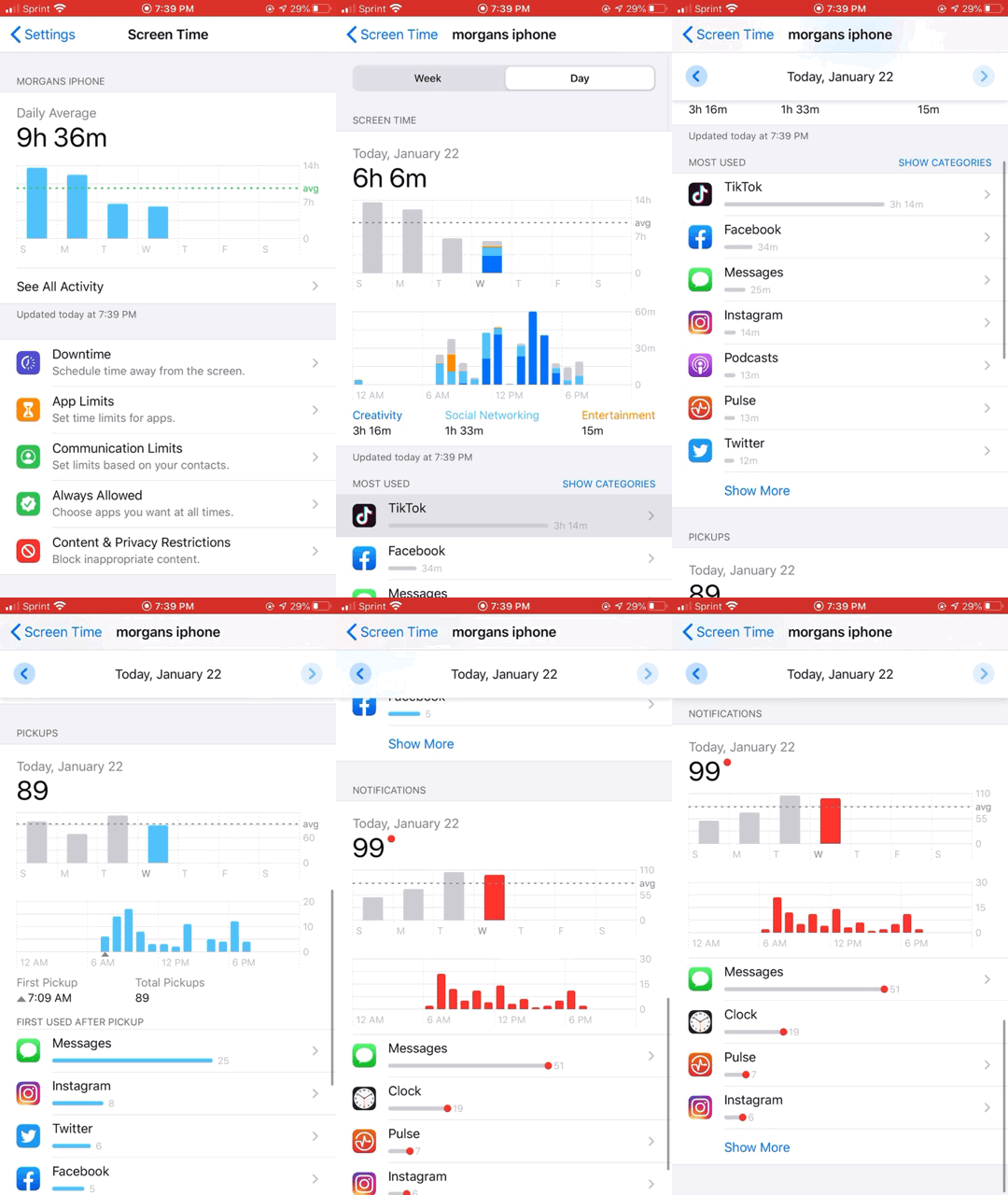
Total, I spent over six hours using my phone. Half of that time was spent on TikTok. That number is nothing compared to my screen time average for the past week, which was a cringeworthy nine and a half hours a day. That’s nearly 40% of my time spent staring at my screen – a way larger percentage than the average 28% that we discussed in class. I could have used that time to study, write in my journal, practice doing my makeup, or nurture other hobbies and skills I neglect in favor of the internet. I realized that I rely on social media and my phone a lot more than I was even conscious of. I knew the next day, the day I had chosen to detox from social media, was going to be tougher than I thought.
Spoiler alert: it wasn’t. I’ll admit I didn’t leave my phone in a drawer all day, but I did set myself some rules. I could use iMessage to get in contact with my boyfriend and my mom, I could check my emails, listen to podcasts and watch Netflix. No Facebook, no Twitter, no Instagram, no Pinterest, no TikTok, no Snapchat. The two weirdest parts of the day were immediately when I woke up and the lull of the evening – both times I typically dedicate to scrolling. Most notably, my day without social media was so much more productive than a typical day. The pockets of time I usually waste on TikTok and YouTube were filled with reading my textbooks, working on assignments I’d procrastinated earlier in the week, and planning out February’s pages in my bullet journal. Rather than deriving satisfaction from likes on my new Facebook profile picture and favorites on my most recent tweet, I found it in accomplishing real-life goals that made me feel organized and responsible. In total, I spent just under six hours using my phone during my detox day. Over half of this was spent watching a docuseries on Netflix and facetiming with my mom, so save for that, I only spent one-third of my average amount of time on my phone.

Communication was not as difficult as I thought it would be. I had a few Snapchat and Facebook messages that went unanswered, but the people I communicate with on a daily basis were able to reach me through iMessage or phone calls. This made me realize that the majority of time I spend on social media is passive and pretty shallow. I usually just look at the posts of other people rather than interacting with them or actively posting myself. Even though I have over 500 Facebook friends, I don’t really care about 90% of what shows up on my feed. My scrolling serves to pass the time, distract me, or keep me briefly entertained rather than keeping me meaningfully connected with people in my life. The meaningful connections I do have with others are built in-person, where I can let down my walls and stop feeling pressured to keep up a “perfect” image of myself. As Sophie Goodman pointed out in her article about online identity, “One thing that differs with Facebook friendships is the heavy weight placed on the presentation of a positive image.” I’ll admit it – the pictures I post for 1,000+ people to see on my Instagram are only a reflection of my greatest hair days, the best memories I have with my friends, or the successful moments in my life. Most of my followers don’t see me when I’m not wearing makeup or stress-crying about finals week. My boyfriend and my best friends do. These are the people that I love, and staying connected with them through social media is the most relevant way I use it. The rest is pretty superficial, and I now know that social media is not as important to my daily communication and relationship building as I thought.
After this experiment, I am considering adding a detox day into my weekly routine. I felt significantly more productive, better focused on my real-life goals, and in turn, less stressed out overall. Although I consider social media a large part of my day-to-day life, I recognize that too much ends up causing more harm than good. Without social media, I can put more time and energy into accomplishing my educational goals, nurturing my hobbies, and taking care of my mental health. This Self Care Sunday, my social profiles will be ignored so I can spend my time improving my real self – not my online image.

 Welcome!